


- Home /
- General Dentistry /
- White Fillings
White Fillings
What Are White Fillings?
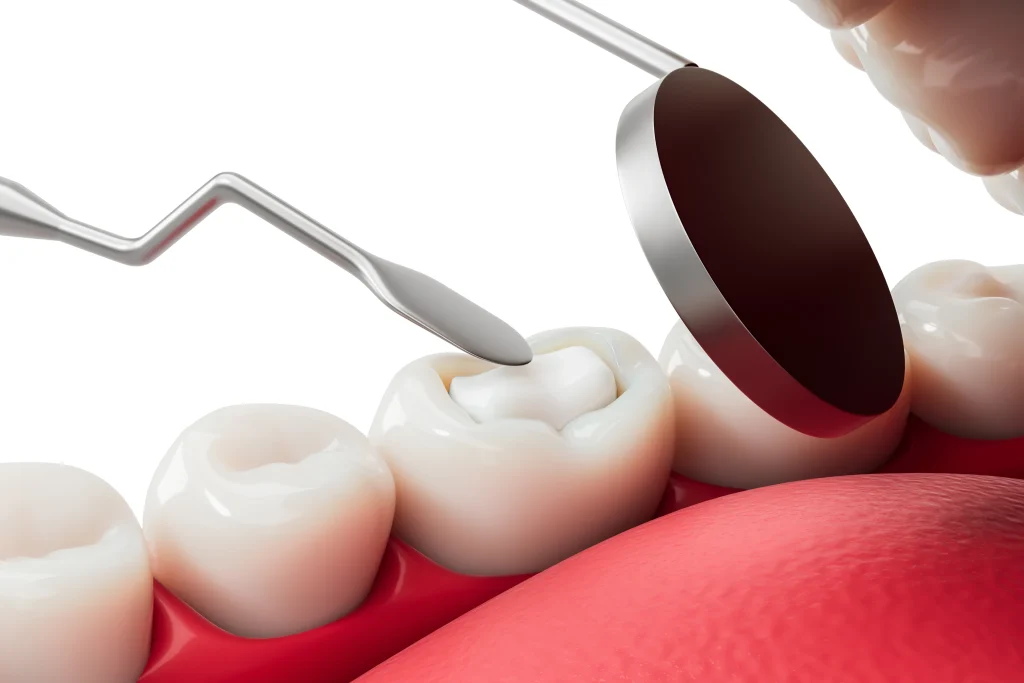
They are restorative materials made of composite resin, placed directly onto the tooth and hardened with a special curing light. Unlike old metal fillings (amalgam), white fillings bond chemically to the tooth, preserving more of the healthy tooth structure.
When Are They Needed?
- New decay in a permanent tooth
- Replacement of old metal (amalgam) fillings
- Chipped or cracked teeth
- Worn teeth due to grinding or aggressive brushing
- Small cosmetic gaps between teeth
The Procedure Step by Step
Examination & diagnosis:
We perform a clinical examination and if needed, a digital X-ray to determine the extent of the decay.
Local anaesthesia:
Gentle, painless local anesthesia is applied to ensure your complete comfort throughout the procedure.
Decay removal:
We carefully remove only the damaged portion of the tooth, preserving as much healthy structure as possible
Placement & curing:
The composite resin is applied in layers and cured with a special light, ensuring maximum strength.
Polishing & finishing:
We shape the filling to match your bite perfectly and polish it for a smooth, natural finish.
Advantages Over Metal Fillings
- Natural appearance. Indistinguishable from real teeth
- Preserve more healthy tooth structure
- Contain no mercury
- Do not transmit temperature changes through the tooth
- Easily repaired without full replacement
Longevity & Care
- A well-placed white filling lasts 7–10 years or more. Its lifespan depends on:
- Daily oral hygiene (brushing + flossing)
- How often you bite into hard foods
- Avoiding teeth grinding (bruxism). Wear a nightguard if needed
- Regular professional cleanings
Everything You Need to Know
Frequently Asked Questions (FAQ)
How long does it take to place a white filling?
Usually 20–45 minutes per tooth, depending on the size of the cavity. Small fillings can often be completed in a single appointment.
Is the procedure painless?
Yes. It’s performed under local anesthesia, so you won’t feel anything during the procedure. You may experience mild sensitivity for 1–2 days afterwards.
Can I eat right after the procedure?
Yes, immediately afterwards. However, it’s best to wait until the anesthesia wears off (about 2 hours) to avoid accidentally biting your cheek or tongue.
Should I replace my old metal fillings?
Not necessarily, if they’re functional and free of problems. However, if there’s decay around them, cracks, or for aesthetic reasons, replacement with a white filling is an excellent option.
How much does a white filling cost in Cyprus?
The cost depends on the size and location of the tooth. At Dentistar, after a thorough examination, we provide a clear and transparent quote before treatment begins.
Do white fillings turn yellow over time?
Modern composite resins are highly resistant to staining. Slight discoloration may occur over the years in smokers or in patients who frequently consume coffee, tea or red wine, but it’s easily corrected with polishing.
Ready to Book Your Appointment?
Contact us today to schedule your visit and take the first step toward a healthier smile.