


- Home /
- Pediatric Dentistry /
- Pediatric Fillings, Crowns & Pulpotomy
Pediatric Fillings, Crowns & Pulpotomy
What Pediatric Fillings, Crowns & Pulpotomy?
When cavities develop in baby or permanent teeth, gentle and effective treatment is essential, not just to stop the decay, but to keep the child’s overall dental development on track. At Dentistar Dental Clinic in Strovolos, Nicosia, we treat children’s teeth with techniques chosen specifically for their age, the type of tooth involved, and the child’s cooperation level.
Why Treating Baby Teeth Matters
Many parents wonder whether it’s worth treating a tooth that’s “going to fall out anyway.” The answer is firmly yes, for several important reasons:
- Baby teeth hold space for the permanent teeth growing underneath
- They are essential for chewing, nutrition and speech development
- Untreated decay can spread to the developing permanent tooth
- Infection from a decayed tooth can cause facial swelling, fever and pain
- Premature loss of a baby tooth often leads to later orthodontic problems
A timely, gentle treatment costs and disrupts far less than waiting for an emergency.
Pediatric White Fillings
What Is Pediatric White Fillings?
Tooth-coloured composite resin fillings, identical to the materials used for adults but applied with techniques and chair-side time adapted to children. We choose composite for almost all pediatric cavities because it:
- Looks natural, no silver or grey "metal mouth"
- Preserves more healthy tooth structure than older materials
- Contains no mercury
- Bonds chemically to the tooth, sealing it well
- Allows for smaller, more conservative restorations
The Procedure
Numbing:
A topical gel is applied first, and the area feels numb in 30 seconds. Then, if needed, a tiny amount of local anesthetic is given gently. We use child-friendly language ("sleepy juice for the tooth") and never "surprise" the child.
Removal of decay:
Gently and quickly, using either a small drill or, where suitable, a laser or hand instruments. We're efficient because long appointments tire children.
Filling placement:
The composite is placed in layers, hardened with a blue light, and shaped to match the tooth's natural form.
Bite check & polish:
The bite is checked and adjusted, and the filling is polished smooth.
Total time:
Usually 20–30 minutes per tooth, often less. Many simple fillings can be done without anyanaesthesia at all.

When We Use Them
- Small-to-moderate cavities in baby teeth
- Cavities in permanent teeth (front and back)
- Chipped front teeth from trauma
- Replacing older silver (amalgam) fillings
Pediatric Crowns (Pre-formed Crowns)
When a Filling Isn't Enough
Sometimes a baby (or permanent) tooth has too much damage for a filling to last. In these cases, a pediatric crown is the right solution. It covers the entire tooth and protects it until the baby too this naturally lost or the permanent tooth has fully matured.
Types We Offer
Stainless Steel Crowns (SSC):
Pre-formed silver-coloured crowns made of medical-grade stainless steel. Time-tested, extremely durable, used for over 70 years in pediatric dentistry. Ideal for baby molars (back teeth) where strength matters more than appearance.
Zirconia Crowns:
White, tooth-coloured ceramic crowns that look like natural teeth. Excellent aesthetics, biocompatible, popular for front teeth or visible back teeth. More expensive than SSCs but provide a beautiful result.
Pre-formed Resin Crowns:
Tooth-coloured crowns with a metal core under resin facing. A middle-ground option in aesthetics and cost.

When Crowns Are Needed
- Extensive decay involving multiple surfaces of the tooth
- After a pulpotomy or pulpectomy (pediatric root canal)
- Fractured teeth where a filling won't hold
- Children with high decay risk who need long-lasting restorations
- Teeth with developmental defects (e.g. enamel hypoplasia)
Pulpotomy (Pediatric "Root Canal")
What a Pulpotomy Is
When decay in a baby tooth has reached the nerve (pulp), the tooth becomes painful and at risk of infection. A pulpotomy is the pediatric equivalent of part of a root canal: we remove the diseased portion of the pulp from the crown of the tooth, while leaving the healthy pulp in the roots intact. The tooth is then protected with a pediatric crown.
The advantage: we save the baby tooth, preserve the space for the permanent tooth coming behind, and avoid the disruption of an early extraction, which would otherwise often require a space maintainer.
When We Recommend It
- Deep decay in a baby tooth that has reached the pulp
- Trauma exposing the nerve of a baby tooth
- Tooth pain or sensitivity suggesting pulp involvement
- Where extraction would otherwise be needed but the tooth still has years left before natural shedding
Pulpectomy: When More Is Needed
If the infection has spread into the root canals of the baby tooth, a pulpectomy is the next option. A full removal of all pulp tissue, similar to an adult root canal. The empty canals are filled with a special pediatric material that resorbs along with the baby tooth at the time of natural shedding.
The Procedure
Numbing:
Gentle local anesthesia: most children don't even notice the injection thanks to topical gel and our distraction techniques
Decay removal:
All decay is removed.
Pulp treatment:
Only the diseased pulp tissue in the crown of the tooth is removed. The healthy pulp in the roots is left in place. A medication is placed to keep the remaining pulp healthy.
Sealing & crown placement:
The tooth is sealed and a pre-formed crown is fitted to protect it for the long term.
Total time:
Usually 30–45 minutes: most children handle it well, especially with our child-friendly techniques(and nitrous oxide if needed).

When We Recommend Extraction Instead
- Sometimes the best decision is to remove a non-restorable baby tooth, when:
- The tooth is fractured below the gum line
- There's a large infection (abscess) that can't be controlled with pulpotomy
- The permanent tooth underneath is close to erupting anyway
- The baby tooth is loose due to other reasons
- After early extraction, a space maintainer is usually placed to protect the space for the permanent tooth. See the Space Maintainers page for full details.
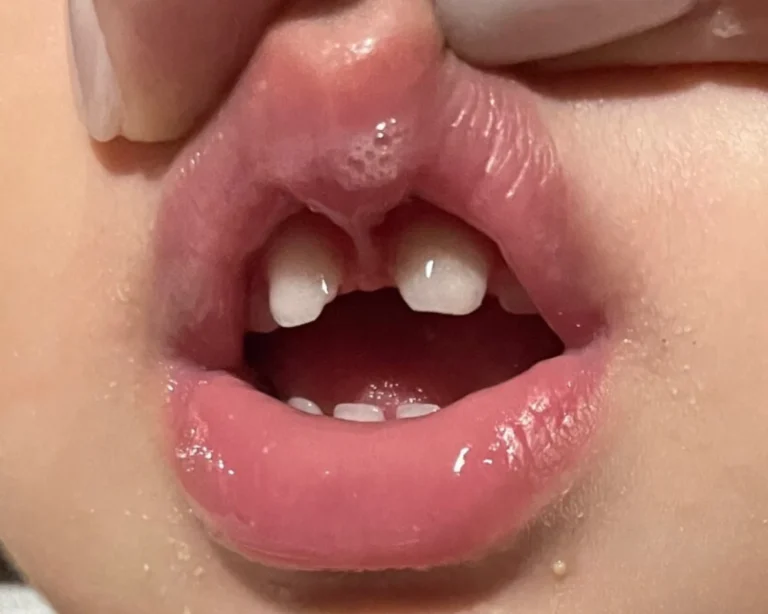
Case

Everything You Need to Know
Frequently Asked Questions (FAQ)
Does my child need anaesthesia for a filling?
It depends on the size of the cavity. Small fillings near the surface often need no anesthesia at all.Deeper fillings benefit from a small local anesthetic applied gently with topical numbing gel first, somost children don’t even notice the injection.
Will my child feel pain during the procedure?
No. When local anaesthesia is needed, the area is fully numb. Some children feel pressure or vibration, but no pain. Our team uses distraction, music or videos, and child-friendly language throughout.
Why a metal (stainless steel) crown; Won't it look bad?
Stainless steel crowns are extremely strong and last until the baby tooth is naturally shed. Usually years. For back teeth, they’re often the best long-term choice. For visible front teeth or where appearance matters more, we offer tooth-coloured zirconia crowns instead. We always discuss the options with you.
Why not just pull the tooth out?
Premature loss of a baby tooth often leads to space loss, crowding and later orthodontic problems. Whenever we can save the tooth with a filling, crown or pulpotomy, that’s usually the better long-term decision. When extraction is unavoidable, we usually follow with a space maintainer.
How long does a pediatric crown last?
A pediatric crown is designed to last until the baby tooth is naturally shed, typically 3–8 years depending on the tooth. They’re highly durable and rarely cause problems.
Will my child need a 'root canal' on a baby tooth?
Possibly, if decay has reached the nerve. The paediatric version of a root canal (pulpotomy or pulpectomy) is gentler and shorter than the adult procedure, and saves the tooth from extraction. It’s a routine, well-established treatment in modern pediatric dentistry.
Can we use nitrous oxide for these procedures?
Yes, in selected cases. Nitrous oxide (laughing gas) is safe, mild and very effective at reducing anxiety in cooperative children. See our Dental Anxiety Management page for full details.
Ready to Book Your Appointment?
Contact us today to schedule your visit and take the first step toward a healthier smile.