


- Home /
- Technology /
- Piezotome Ultrasonic Surgery
Piezotome Ultrasonic Surgery
What Is the Piezotome?
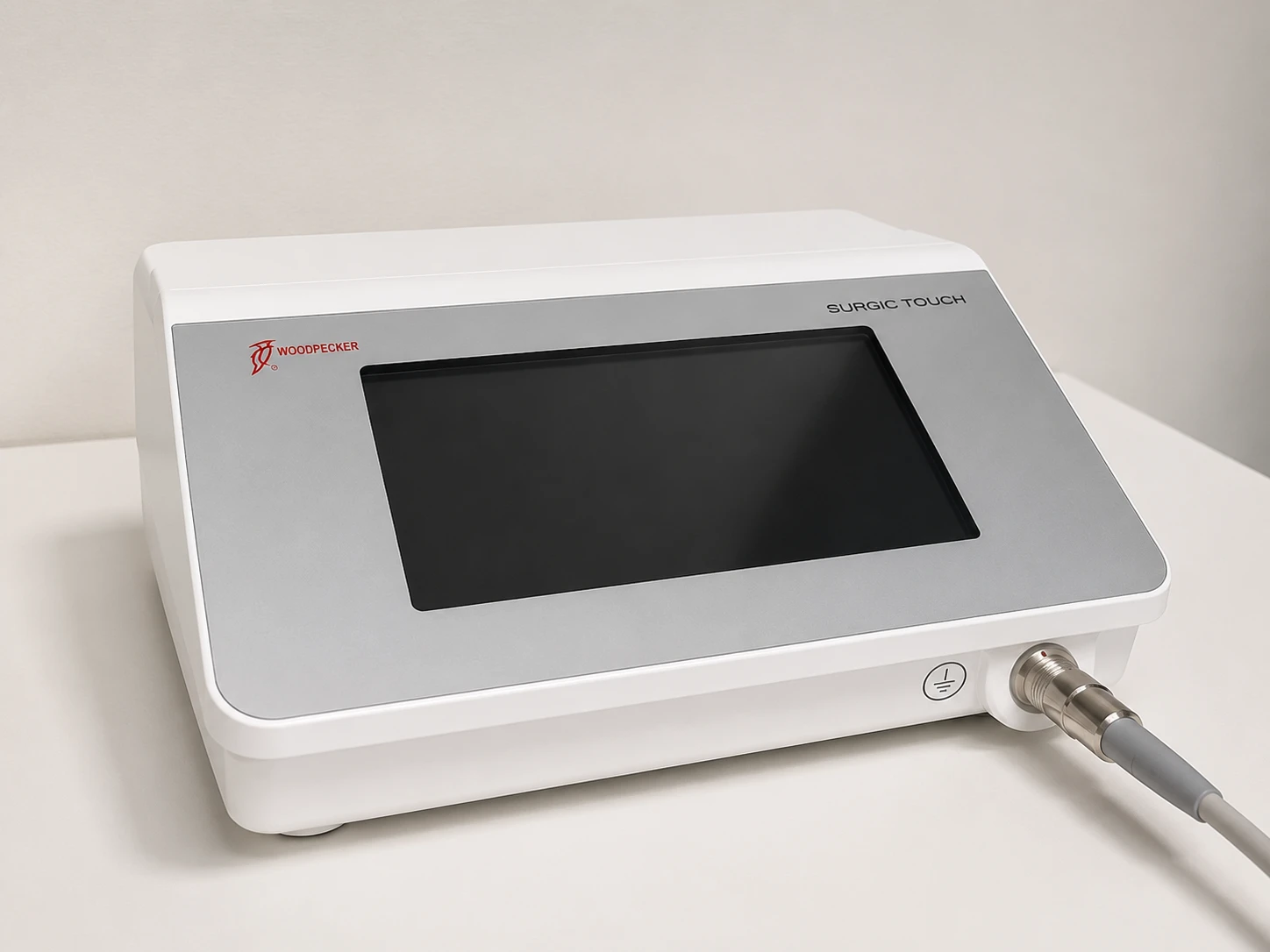
The Piezotome (manufactured by Acteon) is a surgical ultrasonic device also known as a piezoelectric or “piezosurgery” device. Instead of using a rotating drill or burr to cut bone, the Piezotome uses high-frequency micro-vibrations (typically 28–36 kHz) transmitted through a fine-tipped instrument that cuts mineralised tissue (bone, teeth) selectively, greatly reducing the risk of injury to soft tissues (nerves, blood vessels, sinus membranes).
It’s a transformational technology in oral surgery adopted in advanced practices across Europe and increasingly considered the gold standard for certain procedures.
How It Works: The Science of Selective Cutting
Conventional drills cut anything they touch bone, soft tissue, nerve, blood vessel, sinus membrane. This means the surgeon must rely on visual control and experience to avoid critical structures. A slip or unexpected anatomy can cause damage.
Piezoelectric cutting works differently:
The tip vibrates with very small amplitude (a few microns) at ultrasonic frequencies
These vibrations cut hard mineralised tissue (bone, teeth) effectively
The vibrations are tuned to cut bone and are much gentler on soft tissue
If the tip touches a nerve, a blood vessel or a sinus membrane, the risk of tearing or damaging it is much lower than with a conventional drill
The cut is also more precise — a clean, narrow, smooth cut without the heat generated by conventional drilling
This is called “selective cutting” and it’s the foundation of the safety advantage of piezosurgery.
Where We Use the Piezotome at Dentistar
Sinus Lift Surgery
Particularly the open (lateral window) sinus lift. The Piezotome cuts the bone window in the side of the upper jaw with millimetre precision, while the underlying delicate sinus membrane (typically only 0.1–0.5 mm thick) remains intact. Conventional drills routinely tear the sinus membrane piezo surgery dramatically reduces this risk.
Atraumatic Extractions
When a tooth needs to be removed but we want to preserve the surrounding bone (for an immediate or future implant), the Piezotome cuts the periodontal ligament around the tooth precisely releasing it from the socket without crushing the bone. Result: better bone preservation, faster healing, better outcomes for immediate implant placement.
Bone Harvesting for Grafting
When we need autograft (the patient’s own bone) for a bone graft, the Piezotome harvests small blocks of bone from the lower jaw ramus or chin with extreme precision making harvesting safer and faster, with reduced post-operative discomfort.
Bone Splitting / Ridge Expansion
In narrow jaw ridges where the bone needs to be split and gently expanded to allow implant placement, the Piezotome provides the most controlled cutting available without the risk of fracturing the bone in the wrong direction.
Wisdom Tooth Surgery
For impacted wisdom teeth close to the inferior alveolar nerve, the Piezotome can be used to gently remove bone above the tooth with a lower risk of nerve damage, even when the tooth roots are close to the nerve canal.
Apicoectomy (Endodontic Surgery)
When the tip of a tooth root needs to be removed surgically (after failed root canal treatment), the Piezotome creates a precise cut without damaging surrounding tissues combining beautifully with the dental microscope for maximum precision.
Implant Site Preparation
In selected cases particularly soft bone or aesthetic zones Piezotome implant site preparation reduces heat generation and provides better initial implant stability than conventional drilling.
Why Piezosurgery Matters for You as a Patient
- Significantly safer surgery:
- Nerves are protected the Piezotome won't cut the inferior alveolar nerve even if the tip touches it
- Sinus membranes are protected dramatically lower risk of perforation in sinus lifts
- Blood vessels are protected less bleeding during surgery
- Adjacent teeth are protected the cut is precise and selective
- Less post-operative pain and swelling:
- Smaller, cleaner cuts mean less trauma to the surrounding tissue
- Less heat generation than conventional drilling, reducing post-op inflammation
- Many patients report dramatically less swelling than they expected
- Faster healing:
- Precise, clean cuts heal more predictably than rougher conventional cuts
- Better preservation of surrounding bone leads to faster bone regeneration
- Better long-term outcomes:
- Bone preservation around extracted teeth → better foundation for future implants
- Better-protected sinus membranes → fewer complications in sinus lifts
- Better-protected nerves → lower risk of numbness after surgery
Why Choose SprintRay
- Long-established manufacturer (Acteon, France) with extensive clinical literature
- Industry-leading power and precision in ultrasonic surgery
- Comprehensive range of tips for every surgical application
- Reliable, durable performance
- Used in dental schools and advanced practices internationally
- Strong support network and service availability
Everything You Need to Know
Frequently Asked Questions (FAQ)
Is piezosurgery safer than traditional surgical drilling?
For procedures involving critical anatomy (nerves, sinus membranes, blood vessels), yes significantly. The Piezotome’s selective cutting greatly reduces the risk of accidentally injuring soft tissues. This makes sinus lifts, wisdom tooth extractions near nerves and bone grafting procedures safer and more predictable.
Will I feel anything different during piezosurgery?
You may feel a high-frequency vibration through the tooth or jaw similar to the sensation of dental ultrasonic cleaning. It’s not painful (you’ll be under local anaesthesia in any case). Some patients describe a humming sound from the device.
Does piezosurgery take longer?
Slightly the Piezotome cuts bone more gently than a conventional drill, which means a few extra minutes on certain procedures. The trade-off better precision, dramatically lower risk of nerve or sinus damage, faster recovery makes those minutes well worth it.
Is piezosurgery used for every procedure?
No, we use the right tool for each procedure. For routine extractions, conventional instruments work perfectly. For complex bone surgery, surgery near nerves or sinuses, and atraumatic extractions, we reach for the Piezotome. We always select the tool that gives you the safest, most predictable result.
Does piezosurgery cost more?
The cost of treatment reflects the complexity of the case, not the specific tool used. We don’t charge a separate “piezosurgery fee” it’s simply part of how we perform surgery when it’s the right choice.
Is recovery really faster?
Most patients comment on dramatically less swelling and pain than they expected particularly after sinus lifts and complex extractions. Smaller, cleaner cuts heal more quickly and with less inflammation than conventional surgery.
Are there any disadvantages?
Cutting time is slightly slower than conventional drilling, and the equipment is more expensive which is why not every clinic offers it. For the patient, however, the experience is universally better. There are very few clinical disadvantages.
Ready to Book Your Appointment?
Contact us today to schedule your visit and take the first step toward a healthier smile.
